


Blog
What does a farmers market manager do each week?
September 1, 2026 · Keith Mangold · 7 min read

A farmers market manager is part event producer, part vendor coordinator, part site manager, part bookkeeper, and part neighborhood diplomat. The title sounds singular. The work is not.
The exact responsibilities depend on who owns the market and what local agencies require, but the weekly rhythm is remarkably consistent. A good manager turns a moving set of people, paperwork, spaces, payments, weather, and public expectations into a market that appears calm when the gates open.
Early week: close the last market before opening the next one
The week usually starts with reconciliation. Who attended? Which vendors still owe a report or fee? Was there a complaint, safety issue, damaged space, or change that needs a record? Good notes matter because next Saturday arrives faster than anyone expects.
This is also the time to review upcoming applications, expiring documents, and vendor changes. If those jobs wait until Friday, every small exception becomes urgent at once.
Midweek: build the roster and the physical market
The manager confirms who is attending, handles cancellations, works the waitlist, and assigns booths. That last job is not just fitting rectangles into a site. Product mix, vehicle access, power, fire lanes, accessibility, neighbor concerns, and long-running vendor relationships can all affect placement.
The output should be one trustworthy plan: the attending roster, every booth assignment, arrival instructions, and the staff or volunteer schedule. If those answers live in separate spreadsheets and message threads, the manager becomes the only person who can connect them.
Late week: communicate the version that is actually true
Weather changes. A street closes. A vendor drops out. The setup entrance moves. Market managers send reminders and exceptions to the people affected, then answer the replies. The hard part is not writing the message. It is knowing that it reached the vendors attending this specific date without bothering everyone else.
Market day: run the site, not the spreadsheet
Before opening, the manager checks access, sanitation, signage, safety routes, and staff coverage. Vendors arrive, find their spaces, unload, and ask the questions they forgot to ask yesterday. During the market, the manager watches operations, handles incidents, speaks with customers and vendors, and keeps the market aligned with its rules.
After closing comes teardown, cleanup, exceptions, and the notes that will save time next week. A manager may also collect attendance, sales reports, token information, or fee records depending on the market's model.
The common mistakes are systems mistakes
- Keeping the true roster in one person’s head.
- Treating rules as a document vendors read once instead of a policy the market applies consistently.
- Waiting until Friday to discover missing permits, insurance, payments, or staff coverage.
- Using a separate list for applications, booths, messages, documents, and fees without a shared vendor record.
- Automating messages before fixing who should receive them.
What should software take off the manager’s plate?
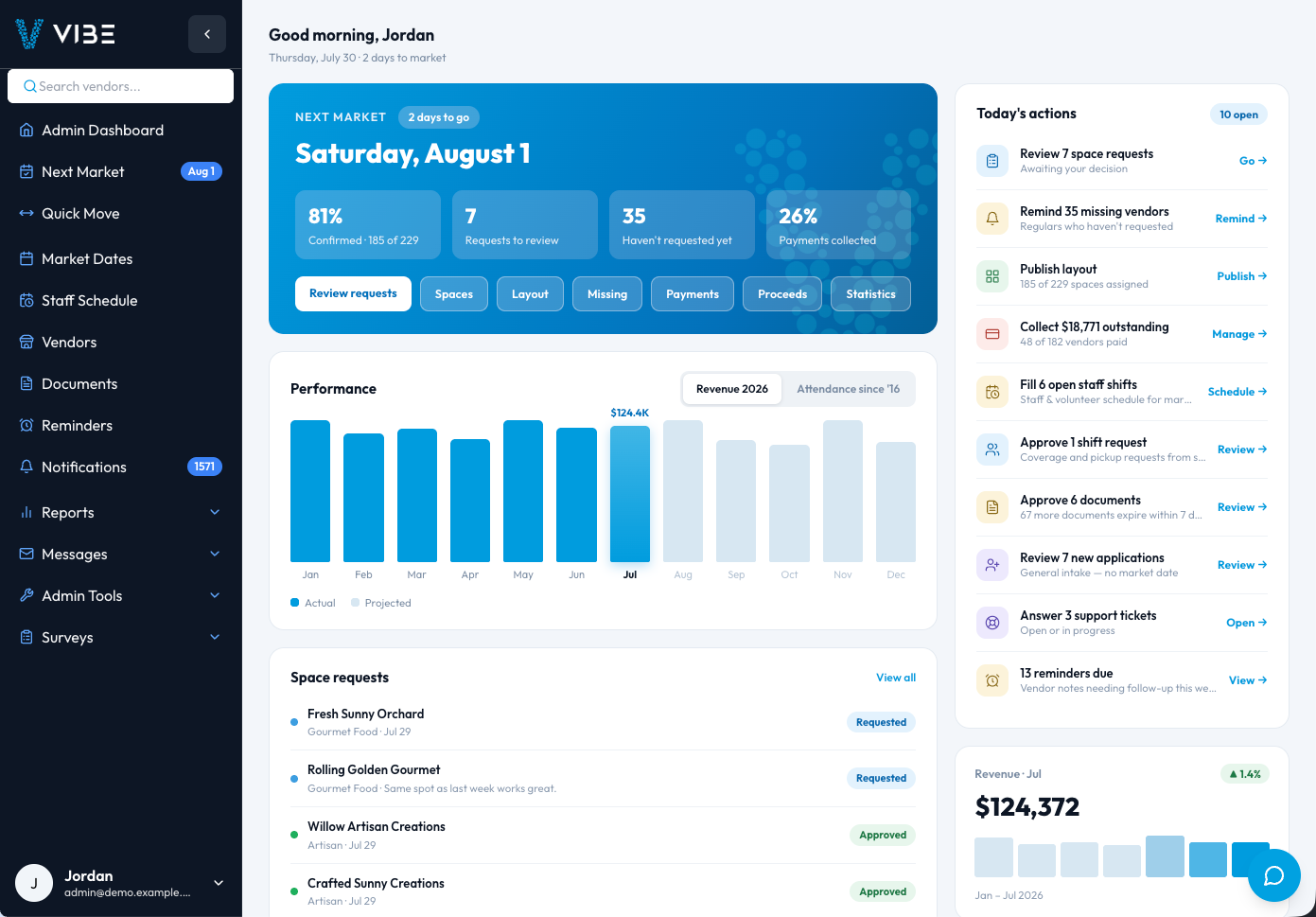
Software should hold the repeatable truth: vendor profiles, applications, required documents, dates, booth assignments, messages, payment records, and history. It should surface exceptions early and let another trained person understand the market without borrowing the manager's brain.
It should not decide the character of the market, settle community arguments, or replace judgment on market morning. The best boundary is simple: let software remember, calculate, route, and remind. Let the manager manage.
More from VIBEPro

Get started
Ready to make your market run smoother?
Tell us about your market, how many vendors, how often you run, what's working and what isn't. We'll show you how VIBEPro fits. No pressure, no hard sell.
Talk to us about your market →